
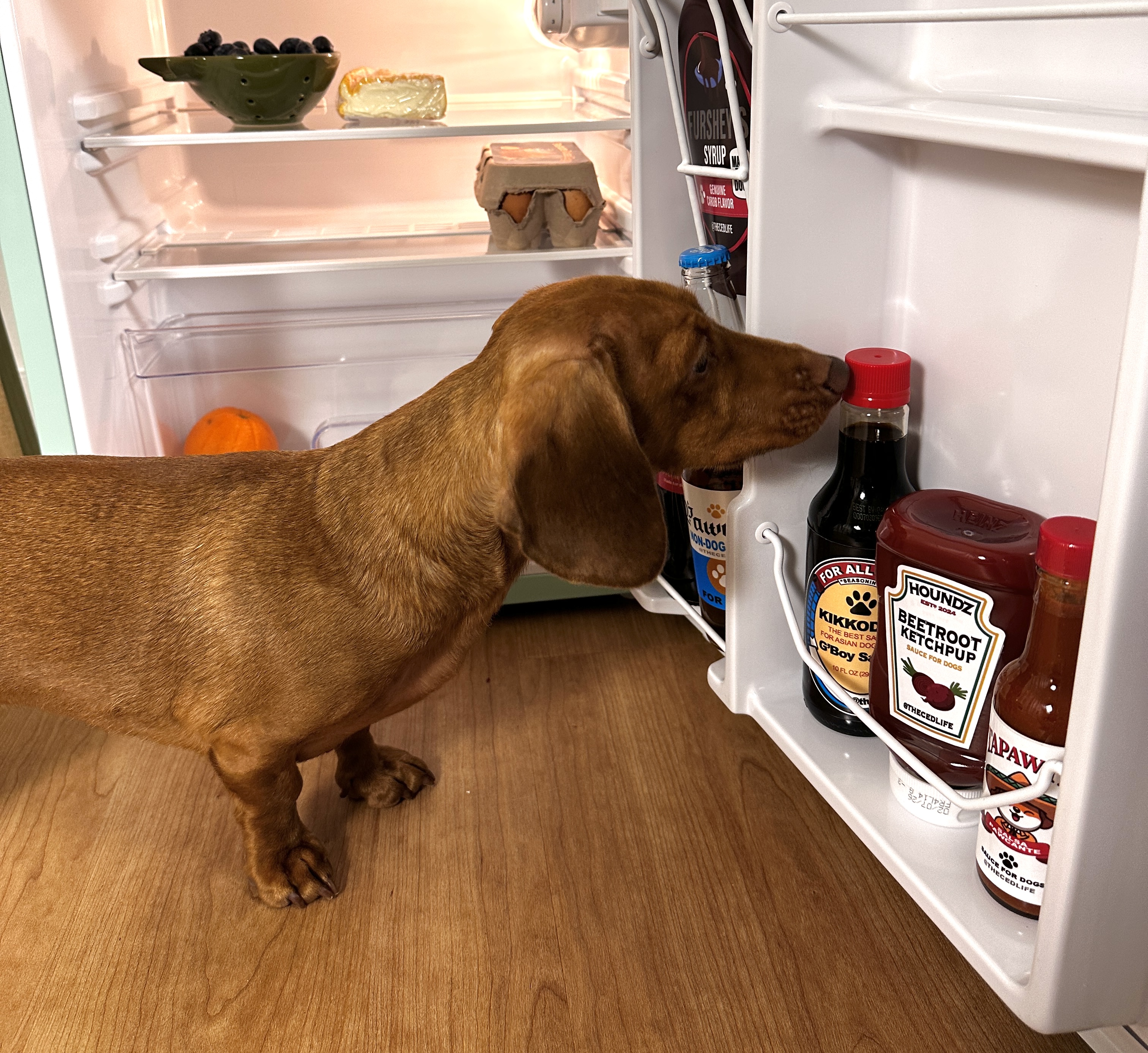
Cedric sniffing around the new doggy fridge
Oxalates are in many kidney stones but are not the CAUSE…
Despite the ability of modern medicine to identify most diseases, understanding the pathology and causes of many chronic ailments in people is still shrouded in mystery. For example many cancers and Alzheimer’s disease are still poorly understood. The mystery remains despite hundreds of billions in funding over the last several decades.
These are hard problems because biology is so complex. For diseases in dogs the problem is two-fold. First is the complexity and the second is lack of funding to study these diseases. Fortunately, because kidney stone pathology and chemistry in dogs is similar to humans we can draw on human studies to help. However, the exact causes of kidney stones remain elusive while prevention is a continued challenge as recurrence in both people and dogs is very high.
Here’s some data on stone composition in dogs from this 21-year study.
73.1% of stones were made up of 2 or more minerals.
53.4% contained struvite (magnesium ammonium phosphate) and 42.0% contained calcium oxalate.
Stones from female dogs are more likely to contain struvite, while stones from male dogs were more likely to contain calcium oxalate.
Young dogs are more likely to have stones containing struvite.
Some breeds are far more likely to suffer from kidney stones that others suggesting a genetic component. Those with the highest risk of developing kidney stones are: Bichon Frise, Miniature Schnauzer, Shih Tzu and Lhasa Apso (between 9 and 23-times greater chance than average).
What actually causes kidney stones?
While researchers don’t know the exact causes of kidney stones, the chemistry and associations are well understood. Excess minerals in the urinary tract crystalize to form stones that can be very painful. It appears that genes play the biggest factor, while health, weight and habits like diet and hydration increase the risk substantially.
In humans, calcium oxalate kidney stones are associated with metabolic syndrome (high blood sugar, high blood lipids, high blood pressure, high body mass index, etc.) Metabolic syndrome is also associated with kidney stones in dogs. One case-controlled study on calcium oxalate stones in dogs (they excluded Miniature Schnauzers) found that for each 1 mmol/L increase in triglycerides the chances of having kidney stones increased by 3.3 times. The risk for hyperglycemia was even higher as each 1 mmol/L increase in blood sugar increased the risk by 39 times!
According to a literature review in humans, researchers identify the main drivers of stone formation to be intestinal absorption of oxalate and kidney function. Another study on Beagles (not prone to form stones) compared to Miniature Schnauzers (known to form stones) found Beagles to have 10-times greater effect in a protein called nephrocalcin, which inhibits stone formation.
How do you prevent stones?
**Encouraging hydration, lowering carbohydrate intake (unfortunately not possible if you feed kibble), and feeding real food can help prevent stones. **
Because stone formation appears to have strong genetic and dietary associations, management is very difficult. Typical advice includes increasing hydration to dilute urine and reducing oxalate intake for those that are prone to stones. In addition, adequate calcium intake, lowered body mass as well as limited sodium intake are all recommended for people with kidney stones.
For dogs, moderate protein diets are often recommended and many “prescription” renal diets have increased table salt in addition to lower protein. The salt leads to increased water intake and reduces the concentration of calcium and oxalates in urine. However, excess salt can also strain the kidneys. As we’ve discussed before, there does not appear to be evidence that high protein diets cause kidney stones in people nor dogs. Instead of salt to encourage hydration, we prefer beverages like meat broth and coconut water.
Given the association with metabolic syndrome and high blood sugar, it appears that lower carbohydrate diets (but possibly not ketogenic diets) may reduce incidence. Also, other studies suggest that probiotics and increased antioxidants are associated with reduced incidence and lower recurrence of kidney stones in people. In other words, real fresh foods and fermented foods like yogurt and kefir may reduce incidence of stones. (Yet another reason to feed real foods!)
Conclusion
If you’re worried about vegetables such as spinach and beets, most dogs will have no issue with oxalates when fed in moderation. (Most oxalates pass through without being absorbed.) Keeping your pups lean and providing moderate carbohydrate diets (20% or less) reduces their risk for nearly every chronic disease. Finally, feeding real food (duh!) and those with probiotics may help the reduce the incidence of kidney stones.