
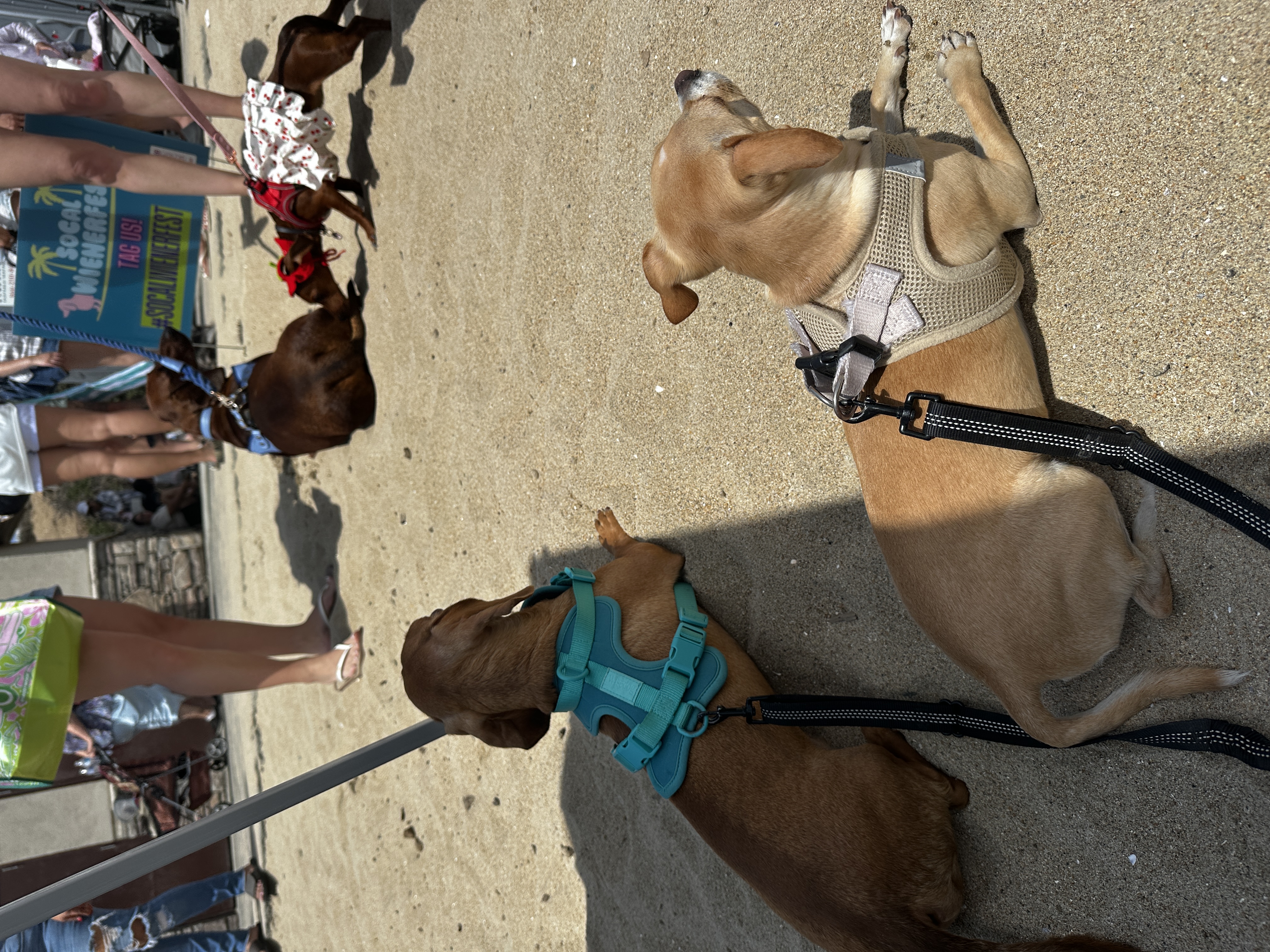
We are back from our trip to the SoCal Wienerfest and getting back into content and work. For those of you who came out, it was so great to meet you and your pups. We hope you enjoyed Chipuple! For those of you who weren’t able to make it out, here are some (terrible) pics. We were so busy serving up Chipuple that we forgot to take photos, haha. Thanks again for all the support.Welcome to Chipuple!Cedric and Edith lounging on the sand

What to do about a chonky dog
Today we are revisiting weight management. It’s a hard topic because pups are exceptionally gifted at looking sad and hungry. Since being hungry is so uncomfortable for us as humans, we assume that it feels the same for dogs. However, hunger is probably not exactly the same because dogs don’t have the same disgust mechanisms that we do and will over eat by a lot. Beyond feeling bad that they are hungry, seeing how happy they are when they get food also makes us feel good. Let’s look at what the research on body composition says.
A growing problem
Obesity is at all-time high. According to various studies, up to 60% of dogs are overweight or obese. There is a strong correlation between obesity and chronic disease. From joint and spine issues, to cancer, diabetes and kidney disease, even undesirable behaviors are more common amongst overweight dogs. The single most important thing that you can do for your dog is manage their weight.
Some breeds have it worse than others. Despite improved access to health care and vaccines, Golden Retrievers’ life expectancy has decreased by 40% since the 1970’s. Researchers have uncovered genetic and environmental factors including one specific gene mutation as well as diet and exercise as the leading causes.
For more on why it’s important to keep dogs lean please see post below.
Weight management kibble is not optimal
As we’ve discussed ad nauseam, dogs were not meant to subsist on high carbohydrate diets. (Kibble, even ones labeled for weight management are still carbohydrate heavy.) Dogs’ ability to digest carbs appears to be a modern development as wolves, dingos and coyotes all don’t have the enzymes that domestic dogs have to digest carbohydrate. Even amongst dog breeds there is a lot of variance in the genes that express these enzymes. According to researchers, dogs like the Siberian Husky have the fewest genes to digest carbohydrates, while the Saluki, originating from the fertile crescent, have the most.
Conversely, dogs fed ultra low-carbohydrate diets (1% calories from carbs) did not appear to suffer adverse effects. In fact, working dogs fed ultra low-carbohydrate diets had higher aerobic output compare to when fed high-carbohydrate diets. The caveat, however, is that racing dogs had slower speeds on similar diets and performed better with moderate protein and moderate carbohydrate diets. **We also find that our pups perform better on about 20% carbohydrates for maintenance. **
What to feed for weight loss
According to numerous studies, the most effective diet for dog weight loss is low-carbohydrate, high-fiber diets. Fiber helps dogs to feel full while also slowing down digestion and supporting the microbiome that lives in their guts. **Since diets like these are impossible to make into kibble, dogs on weight management kibble get diets that are low-fat, high-carbohydrate, high-fiber. **
See this post for more:
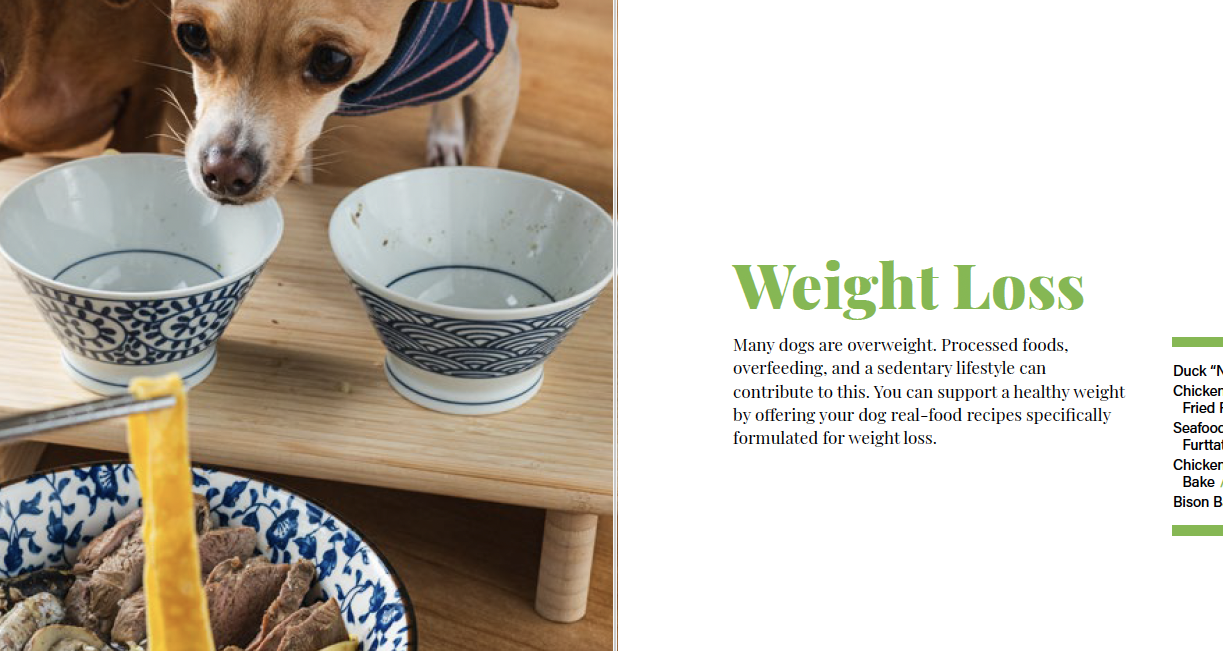
In our upcoming cookbook, The Dog’s Table, we have a section of recipes dedicated to weight management.
These recipes are ultra-low carb, grain-free, and incorporate extra veggies instead. When we first got her as a puppy, Edith was extremely skinny and needed more food to grow. Over the past couple of months, she has gained a touch too much weight for what we think is ideal, so we have her on a weight loss recipe now. We don’t think she knows as still thoroughly enjoys her food. Even if the dog’s are at a healthy weight, we’ll still feed them these on occasion just to switch things up. Sneak peek of the Weight Loss section in The Dog’s Table
Once dogs are back to their ideal weight, we recommend returning to maintenance diets and adjusting their portion sizes as needed to keep them lean. As mentioned above, maintenance diets are different for different breeds and individuals. Some dogs aren’t well adapted to carbs while others do better on a moderate carbohydrate diet. Experimenting is pretty simple. You can stick to one recipe and lower the carbohydrate, while monitoring your dog’s physical condition like their poop, energy levels, flatulence, etc. Keep notes and adjust accordingly. It’s a bit of work, but can be fun and will help your pups live their best lives.