
Dogs have higher protein requirements than humans. According to a review in The Journal of Animal Science and Biotechnology, dogs have a 90% higher arginine (an amino acid found in proteins) catabolism than humans. This requires a higher intake of high-quality proteins than we need.

Considering that modern dog kibble is up to 70% carbohydrate understanding what this mean for your dog’s health and activity levels is important. Dogs are facultative carnivores, meaning they are primarily meat eaters, but can also digest plant matter.
Does lowering glucose levels decrease activity?
According to a study done on New Zeland farm dogs published in 2021, diets low in carbohydrate do in fact lower glucose levels in dogs. Interestingly the results show that rather than decreasing activity levels, a very low carb diet significantly increased dogs activity levels, despite lowering blood glucose levels. In the figure below IG is the measure of glucose, while Delta-g is the measure of activity.
The diets in the two groups had the following breakdown:
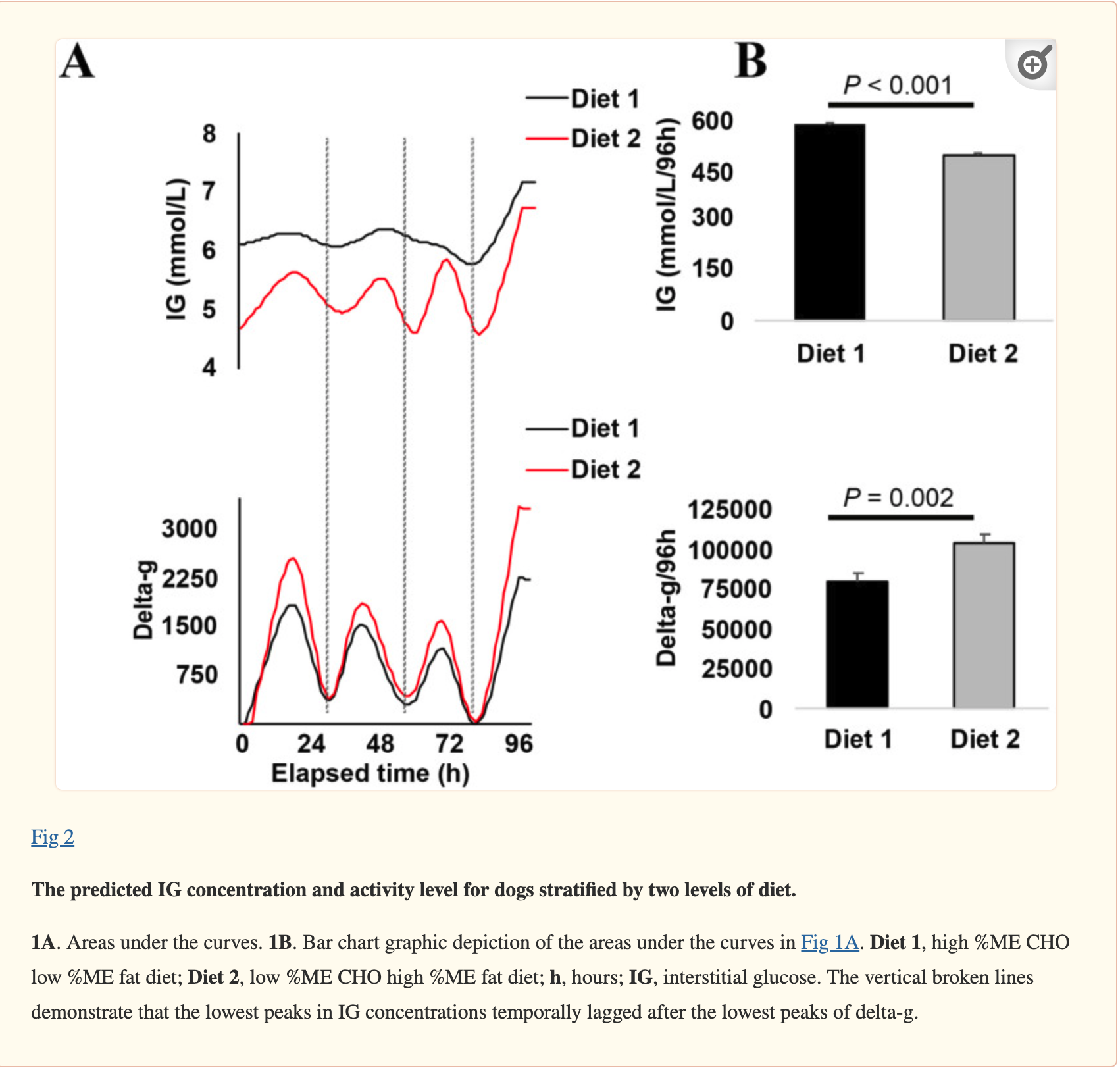
Diet 1 (high carb) 23% protein 25% fat 52% carbohydrate
Diet 2 (very low carb) 37% protein 63% fat
1% carbohydrate
What does this mean for my dog?
Because the dogs used in this study are like canine super athletes, drawing conclusions for your lazy (or less active) pup is not straight forward. The good news is that none of the dogs experienced any adverse effects from low blood sugar. So eliminating carbs for dogs doesn’t appear to have any adverse effects. However, you may not want extremely active dogs in your house. I know Ced can drive me crazy.
In our formulations we aim to keep carbohydrates below 20% calories, and for seniors and athelets it’s usually below 10%. Yet some dogs have medical conditions may need specialized diets higher in carbs. So it really depends on every dog and dog owners needs. Keep in mind that if your dog is less active, high fat diets need to be carefully controlled because they are more calorically dense.